Work on the third issue of Folly Ground continues at a glacial pace. However, it is nice to spend some concentrated time on it during the festive season and away from the daily 09:00-17:00. If all goes well, some new pages will be ready by the end of next week. Here’s hoping!
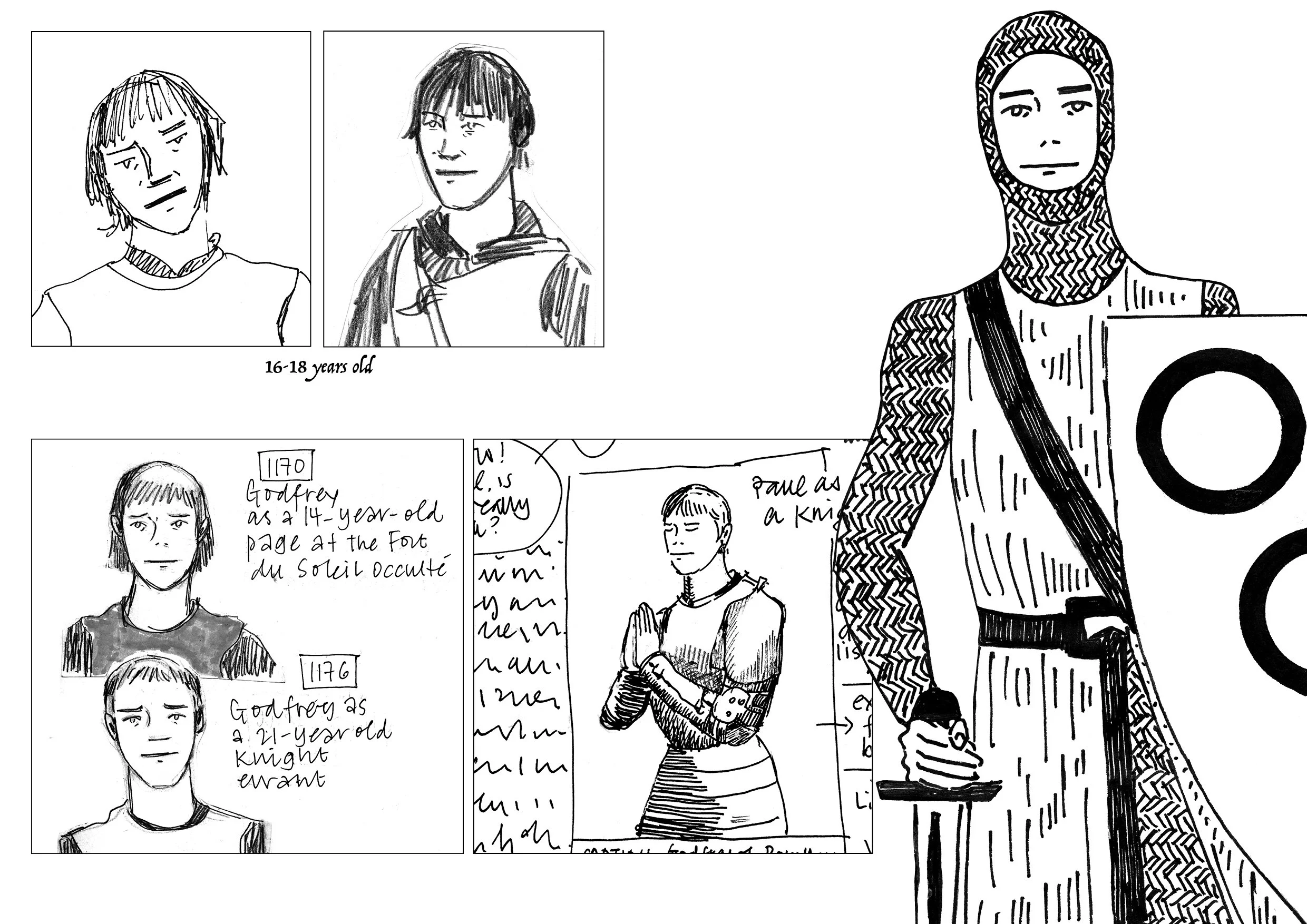
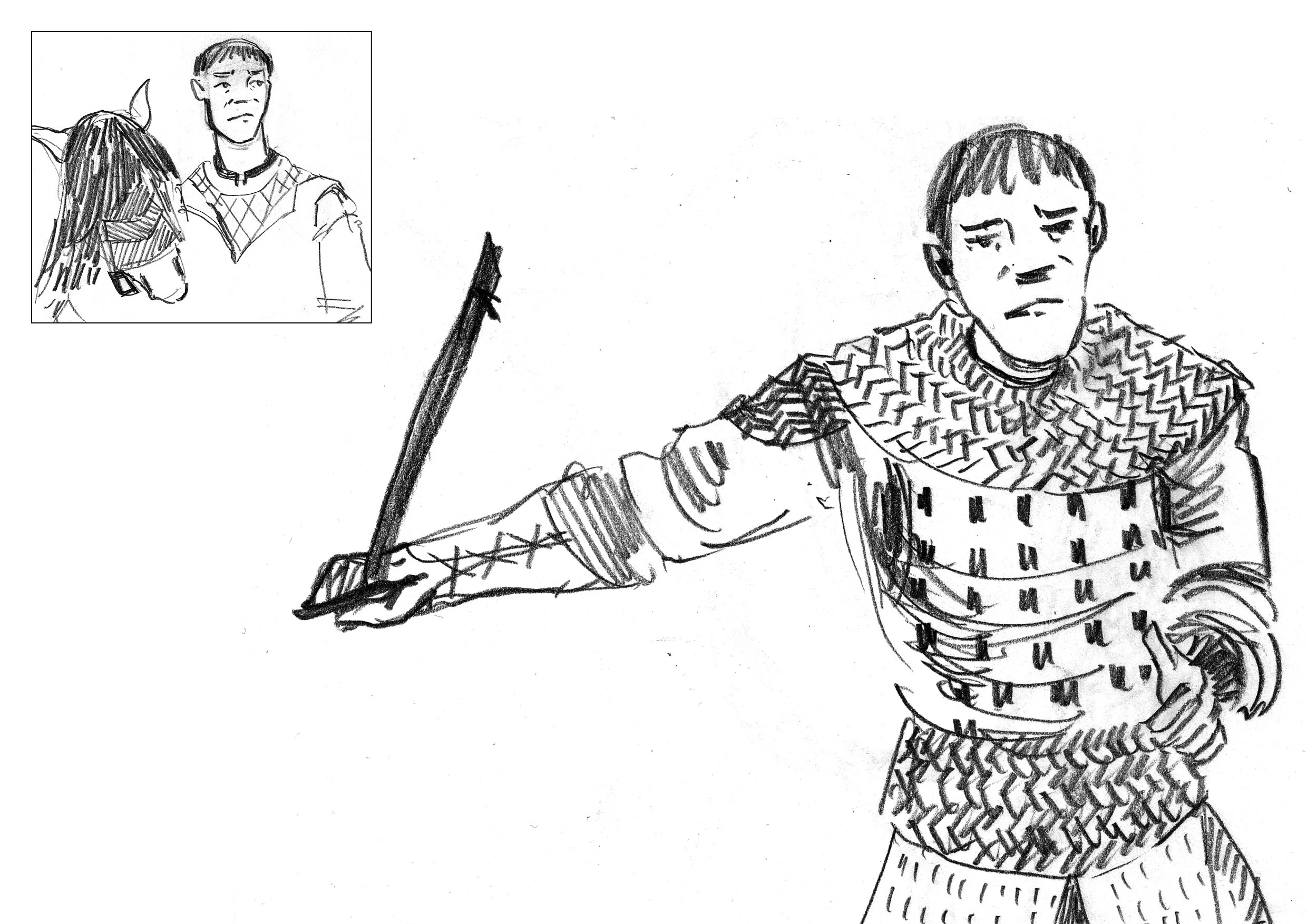
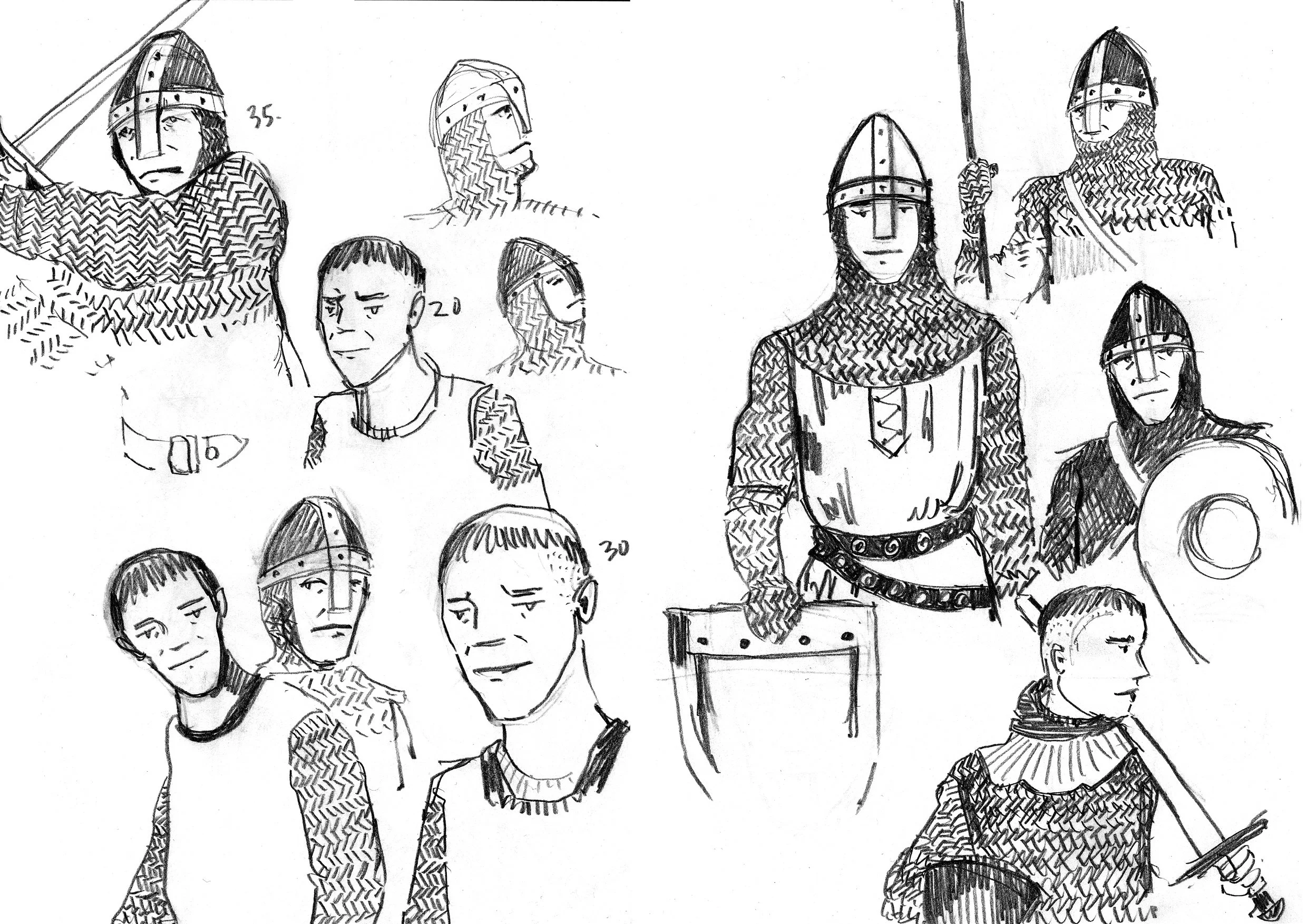
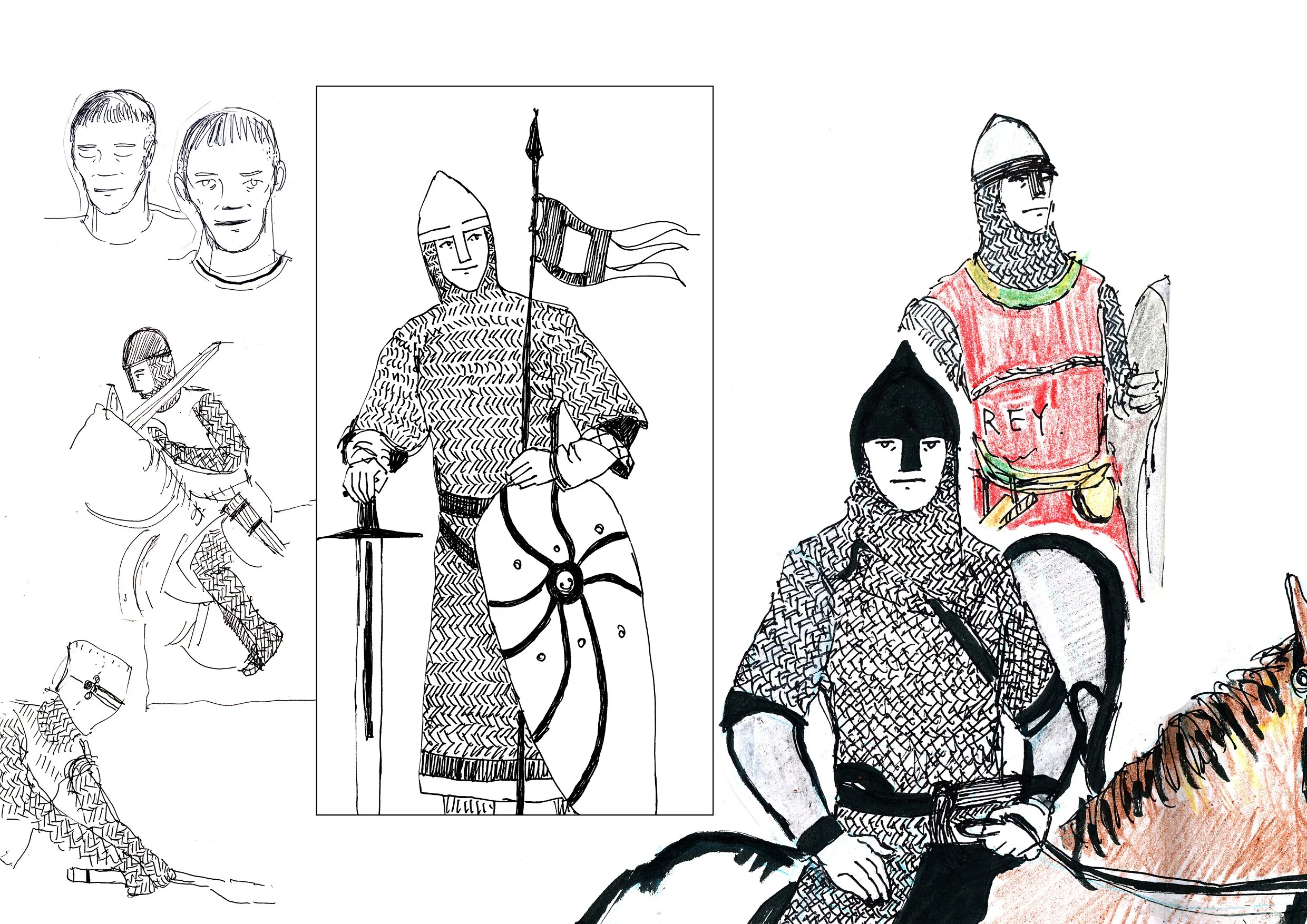
Above are some preparatory worksheets showing the (design) evolution of Godfrey the Wanderer, the character around whom the story of the third issue revolves. He is a figure of fascination for young Paul who thinks he may be related to him (see below). You may have caught glimpses of him in previous blog posts (see 3 January and 13 September 2025 and 24 June and 7 July 2024).
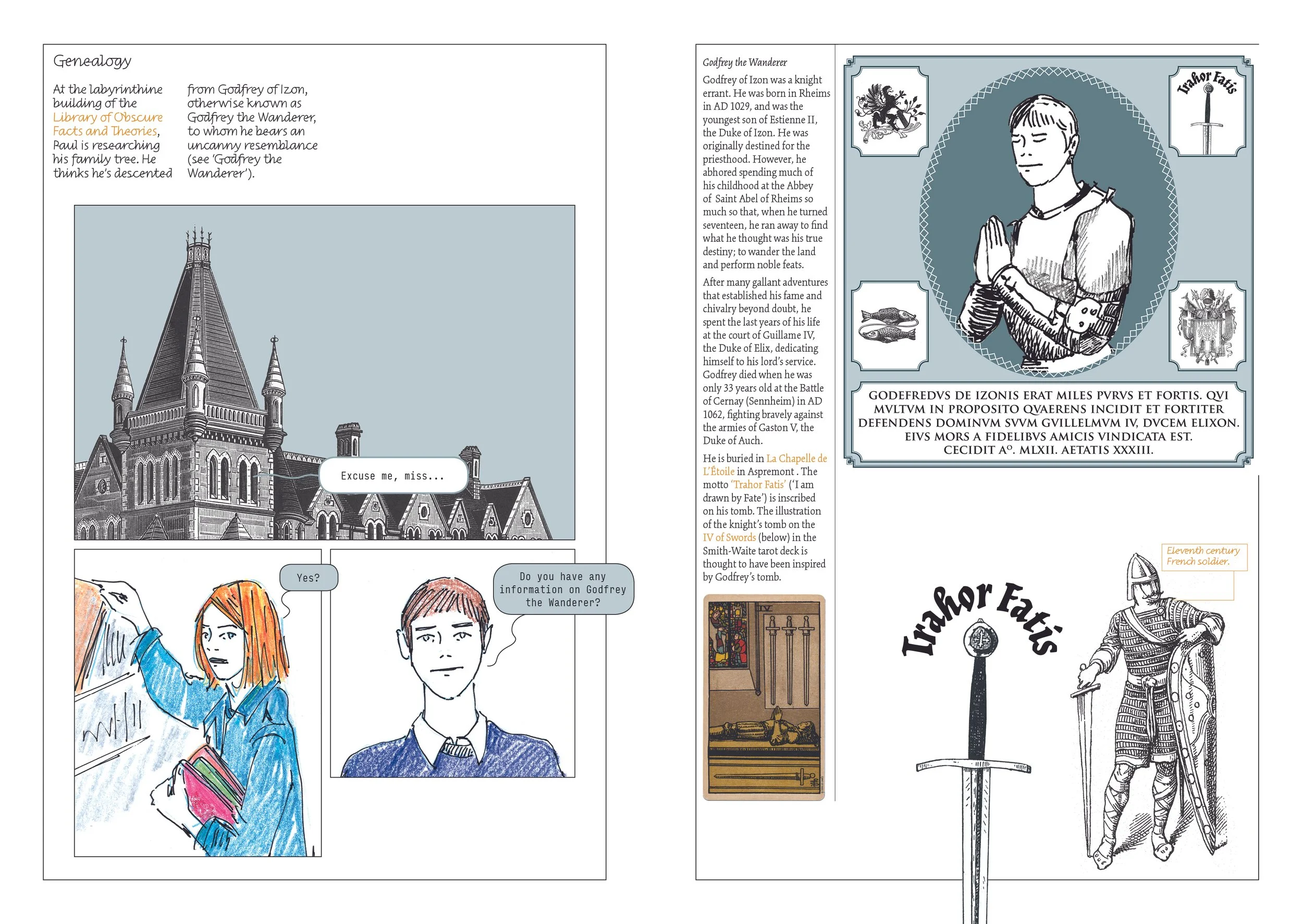
Here is some preliminary biographical information to go with the worksheets:
Godfrey of Izon (born c. 1156 – died 5 June 1198, Valenmont, France) was a Norman soldier, crusader, and captain of Guillaume IV’s militia. He was born at the Château des Nuages Dispersés (Castle of Scattering Clouds) in Izon, Normandy, and was the third son of Estienne II, Count of Izon and Ida of Rheims, daughter of William Devereux, Duke of St. Clair-Fort. Teasingly called ‘Godfrey The Wanderer’ due to his restlessness and liking for the peripatetic life, Godfrey was knighted in 1174 and spent his younger years as a knight-errant and a successful tournament competitor. Although information about Godfrey’s life is incomplete, his life was subsequently embellished in Medieval and Renaissance literature, the most well-known of which is the 13th century epic Chanson de Godfroi narrating his famously mystical encounter with The Hanged Man (he of Tarot fame). He died on the 5th of June 1198 by an arrow whilst laying siege to the Forteresse de l’ Abattement (Fortress of Dejection) in Valenmont, and was buried in La Chapelle de L’ Étoile (Chapel of The Star) in Aspremont.
All names and places above are of course entirely fictional, although the character and life of Godfrey is loosely based on William Marshal, 1st Earl of Pembroke, the famed 12th century Anglo-Norman knight; he served five English kings (Henry II, his sons Young Henry, Richard I, and John as well as John’s son, Henry III) as royal adviser, agent and as a soldier of outstanding prowess. His tomb can be visited at the Temple Church* in London.
Follow-up posts on the development of the third issue to come soon-ish.
*Temple Church was built by the Knights Templar for their English headquarters and consecrated on 10 February 1185.